Tour of the demo
A superproject with fourteen submodules, built offline, that shows every tracking mode and every state.
The repository contains scripts/demo.sh. It builds a firmware
superproject from local repositories and walks through LazySubmodules on
it in twelve short chapters. It is also an end-to-end test: every command
must exit with the status the story expects, or the demo fails.
Run the demo
The demo needs Bash, Git 2.39 or later and a lazysubmodules binary.
For the signed tag in chapter 10 it also needs ssh-keygen.
git clone https://github.com/FPGArtktic/lazysubmodules.git
cd lazysubmodules
scripts/build-in-container.sh build   # binary in bin/lazysubmodules
scripts/demo.sh                       # press Enter between the chapters
With a host Go toolchain, go build -o bin/lazysubmodules ./cmd/lazysubmodules
builds the binary instead. By default the demo runs bin/lazysubmodules,
or else lazysubmodules from PATH.
Option |
Effect |
|---|---|
|
Build the demo in |
|
Build and describe the superproject, then stop; needs |
|
Do not wait for Enter between the chapters |
|
Also write the output to |
|
The |
What the demo isolates
Your configuration: Git runs without your user and system configuration, and
HOMEandTMPDIRpoint into the demo directory.The network: Git may use only the file transport. Every submodule URL starts with
https://git.example.invalid/, a host that does not exist, andurl.<base>.insteadOfrewrites it to bare repositories inDIR/mirror, the way a company mirror is set up.Randomness: identities and dates are fixed, so the commit IDs and the output are the same in every run.
Without --keep, everything happens in a temporary directory that is
removed at the end.
The superproject
Submodule |
Path |
Tracks |
Situation at the start |
|---|---|---|---|
|
|
tag pattern |
Locked at |
|
|
branch |
|
|
|
tag |
Name with a dot; the demo moves the tag upstream |
|
|
a commit |
Name and path with a space |
|
|
nothing |
Unmanaged |
|
|
branch |
Its nested submodule is at another commit |
|
|
tag |
Deinitialized; its repository in |
|
|
tag pattern |
Never cloned |
|
|
tag |
Uncommitted change |
|
|
tag pattern |
Locked at the release candidate |
|
|
branch |
A branch other than |
|
|
tag |
The tag does not exist |
|
|
tag |
The tag is SSH-signed |
|
|
tag |
|
Explore it yourself
Keep the demo and stop before the story changes anything. env.sh sets
HOME and the Git environment of the demo, so source it in a separate
shell:
scripts/demo.sh --keep /tmp/lsm-demo --setup-only
. /tmp/lsm-demo/env.sh
cd /tmp/lsm-demo/firmware
DIR/firmware is the superproject, DIR/mirror holds the upstream
repositories (bare), and DIR/work is where their history was written.
Every command on this site that uses the demo names runs in such a
shell.
lazysubmodules status shows every state at once. It reads local refs
only, so it works offline:
$ lazysubmodules status
NAME        PATH               MODE         REF      LOCK                   HEAD     STATE
kernel      kernel             tag-pattern  v6.6.*   8106f61 (v6.6.9)       8106f61  behind
u-boot      bootloader/u-boot  branch       main     29b295c                29b295c  behind
fpga.core   ip/fpga-core       tag          v2.3.1   556baa1                556baa1  ok
crypto lib  libs/crypto lib    commit       5da6927  5da6927                5da6927  ok
legacy      vendor/legacy      -            -        -                      2f54e11  unmanaged
tools       tools/nested       branch       develop  3e8e307                3e8e307  ok
theme       docs/theme         tag          v1.0.0   05f49f3                -        uninitialized
fresh       third_party/fresh  tag-pattern  v1.*     f2de3e1 (v1.1.0)       -        uninitialized
app         apps/app           tag          v1.2.0   cfa9d86                cfa9d86  dirty
sdk         sdk                tag-pattern  v*       6308203 (v3.0.0-rc.2)  6308203  ok
mirror-lib  libs/mirror        branch       stable   71eb52c                71eb52c  ok
broken      libs/broken        tag          v9.9.9   52c4bdb (v1.0.0)       52c4bdb  missing-ref
signed      libs/signed        tag          v1.0.0   5d1133e                5d1133e  ok
quirky      libs/quirky        tag          v1.0.0   64eca61                64eca61  ok
[exit status 0: success]
The [exit status N: …] lines come from the demo, not from
LazySubmodules. The states mean:
behind:
kernelhas a newerv6.6.xtag, andorigin/mainofu-boothas moved on.uninitialized:
themewas deinitialized,freshwas never cloned.dirty:
apphas an uncommitted change.missing-ref:
brokentracks tagv9.9.9, which does not exist.unmanaged:
legacyhas nolsm-modekey.ok:
sdkstays at its release candidate becausev3.0.0-rc.2is still the highest tag matching its pattern, and the tag the lock file records is never skipped for being a pre-release; see Never downgrade.toolsisokalthough its nested submodule is at another commit, andquirkyalthough.gitmodulessaysupdate = noneandignore = all.
The seventh state, drift, needs a submodule that moved away from its lock entry; the demo produces it in chapter 8, when a tag moves upstream.
States defines every state and the order in which they are checked. The machine-readable form of the same table is described in Porcelain format v1.
Try the terminal interface
In the same shell, start the terminal interface:
lazysubmodules tui
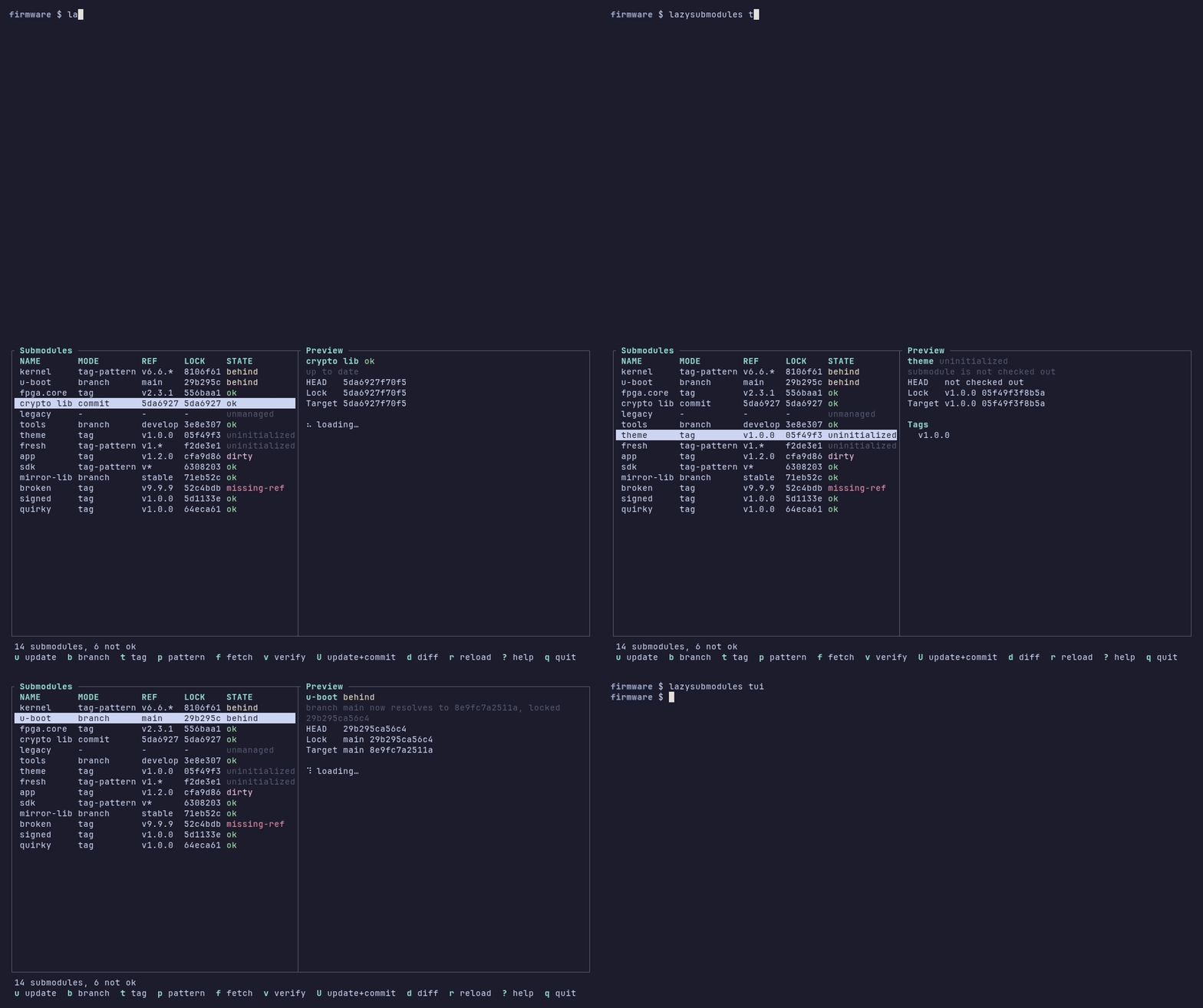
Move to u-boot with j, press u, and confirm with y
once the planned update is shown. Use the terminal interface
explains the rest.
The chapters
Each chapter corresponds to a guide on this site:
The superproject: history,
.gitmodulesand.lsm.lock(Files: .gitmodules and .lsm.lock).status: every state at once (States).status --porcelain=v1and a script that uses it (Scripts and CI).set: an unmanaged submodule is refused, then put under control (Change what a submodule tracks).update --dry-run, with and without--include-prerelease(Update submodules).A refused
update(exit status 3), and how to fix each problem (Update submodules).update --commitfor a selection, and the generated commit message (Commit updates).A tag moved upstream:
fetch,driftandverify(exit status 4) (Detect moved tags).update --fetchclones a submodule through the mirror (Mirrors, credentials and offline work).verify --signatures(Verify signatures).foreach, including a failing command (Run a command in every submodule).The final state: every submodule is
ok.
The complete output is in
examples/transcript.txt,
and the .gitmodules and .lsm.lock the demo ends with are in
examples/.
To run the whole story without stopping and keep the result:
scripts/demo.sh --keep /tmp/lsm-demo-full --no-pause