Safety model
LazySubmodules refuses rather than guesses, and changes nothing unless every selected submodule is safe to update.
A superproject holds work that is easy to lose: uncommitted changes in submodules, staged changes in the index, commits that exist in one checkout only. LazySubmodules therefore follows a few rules throughout.
All or nothing
update checks every selected submodule before it changes anything. A
single problem stops the whole update, with exit status 3, and every
problem is reported at once, one per line. Nothing is checked out,
written or staged; not even the submodules that were safe.
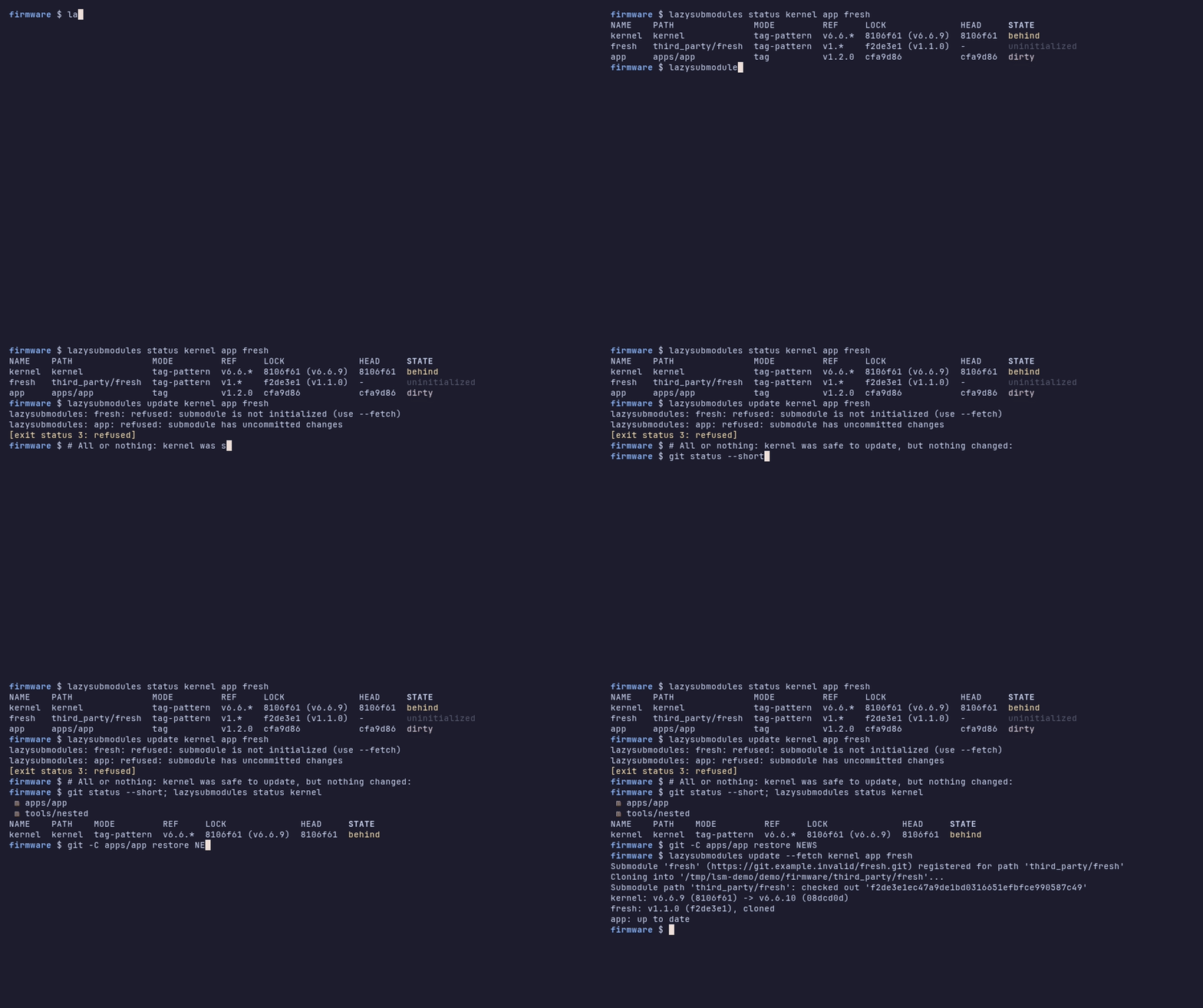
The alternative, updating what can be updated, would leave a superproject in which some submodules moved and others did not, and a lock file that describes neither the old nor the new state. A refusal leaves you with the state you started from and a list of things to fix. Update submodules lists every refusal.
With --fetch, the fetch runs before the checks that need fetched refs,
and its clones stay when such a check fails. Fetching and cloning change
no gitlink, lock entry or checkout that the superproject records.
What counts as a change you could lose
Uncommitted changes in a submodule’s working tree block the update of that submodule. Untracked files do not, because a checkout does not touch them.
Nested submodules that are only checked out at another commit do not block it either; LazySubmodules does not manage them. Modified files inside a nested submodule do.
Staged changes to other paths of the superproject are kept by a plain
update.update --commitrefuses when they are not part of the update, so that the commit contains nothing else (see Commit updates).Unresolved merge conflicts in the index block
update --commit.Unmanaged submodules are never touched. Naming one is refused.
A detached HEAD in a submodule is normal, not a problem: submodules are checked out at commits, not branches.
Rollback on interruption
Ctrl+C, SIGTERM and SIGHUP cancel a running command and
terminate the git processes it started.
An
updateinterrupted before staging puts back what it changed: submodules it already checked out return to their previous commit, the lock entries and nativebranchkeys get their previous values back, and nothing is staged. Submodules it initialized stay initialized, as after a refusedupdate --fetch.Once the result is staged, only the commit remains. When
git commitis interrupted or fails, for example in a hook, the update stays staged and no commit is made.A second signal ends LazySubmodules at once, without the clean-up, for the case where the clean-up itself hangs.
SIGINTandSIGHUPstay ignored when they were ignored at start, as undernohup.
Signals has the details.
Untrusted repositories
A cloned superproject is data from someone else. Its .gitmodules and
.lsm.lock may have been written to trick a tool into writing files
elsewhere, running commands or confusing a terminal. LazySubmodules
defends against that:
No symbolic links in place of its files.
.gitmodulesand.lsm.lockmust be regular files. A symbolic link is refused, so that a clone cannot redirect a write to a file outside the superproject:lazysubmodules: read .lsm.lock: config file …/.lsm.lock: not a regular file
No paths through symbolic links or files. A submodule path that leads through a symbolic link is refused by
updateandadd, and a new path must lie inside the superproject.Validated values. Refs, patterns, paths and URLs are checked before they reach
git: no empty values, no leading-, whichgitcould read as an option, and no control characters. A configured ref that fails the check makes the submodulemissing-ref.No shell. Every
gitcommand runs with its arguments passed directly.foreachruns your command without a shell as well.No commands from
.gitmodules. Submodules are initialized withgit submodule update --checkout, whatever theupdatekey in.gitmodulessays, and paths are passed as literal pathspecs.Quoted output. Names, refs and paths with unusual characters are printed quoted, so they cannot send control sequences to the terminal. A submodule named
evilfollowed by an escape sequence appears as"evil\x1b[31mred"in the table and in messages, and as"evil\033[31mred"in the porcelain format.Valid porcelain output.
status --porcelain=v1escapes TABs, line breaks, quotes and invalid UTF-8, so a hostile name can neither add a record nor shift the fields of one; the output is always valid UTF-8.
Git’s own protections apply as well. For example, Git allows the file
transport for submodules only when protocol.file.allow permits it.
Predictable network access
Only fetch, update --fetch and add use the network, and only
through git. Everything else, including every dry run, works on local
refs. This rule is part of the stable interface, for three reasons:
No surprises. Reading the state of a superproject never contacts a server, so it works offline and never waits for one.
Consistent answers.
status, a dry run and an update without--fetchsee the same refs, so the update does what the dry run showed.Clear credentials. Only commands that are expected to connect can ask for credentials.
The terminal interface and Git
While the terminal interface is shown, Git runs in a session of its own,
without access to the terminal, and with GIT_TERMINAL_PROMPT=0. A
credential or host key prompt therefore fails cleanly instead of drawing
over the screen or waiting for input that never comes. See
Git without a terminal in the TUI.
Reporting a vulnerability
If you find a way around any of this, report it privately; see the Security policy.
See also
How LazySubmodules works: the steps of an update.
Exit codes: exit status 3 and the others.